Bloomington, CA · San Bernardino County
Full Structural Restoration in Bloomington, CALoad-Bearing Wall Restoration & Structural Moisture Removal
Full Structural Restoration in Bloomington covers structural water damage repair, foundation water restoration and wall framing drying services.
Answered 24/7
Professional Full Structural Restoration in Bloomington, CA
In Bloomington, a census-designated place in San Bernardino County, water often reaches hidden sill plates and header beams that hold the structure up. The restoration professionals in the area handle it by prioritizing structural drying and dehumidification to stabilize the environment before any physical repairs begin.
In Bloomington, structural repairs after water events often include load-bearing walls. Nearby communities like Fontana, Sunnyslope and Rialto share these concerns, requiring expert intervention to prevent further damage. Local structural restoration pros provide around-the-clock help and thorough structural damage assessment.
Detailed Full Structural Restoration Services in Bloomington, CA
Load-Bearing Wall Restoration
Repairs return the wall to its original load capacity. Experts inspect for twisting or bowing in structural members. Repair can include adding steel brackets or replacing frame sections.
Structural Moisture Removal
Soaked framing or sheathing must be repaired. The pros assess saturation depth and structural compromise. They dry or replace damaged wood with stable new material.
Floor Joist Repair Services
Water-damaged floor joists are reached by removing subfloor sections if needed. The wood is cleaned, dried and treated before it is repaired or replaced.
Foundation Water Restoration
Concrete holds water and releases it slowly. Experts check for moisture and mold in slabs and foundation walls and dry them so the problem does not return.
Structural Water Damage Repair
Hidden framing gets wet when water runs into walls and floors. Pros use moisture meters and thermal imaging to find it, then dry it in place.
Warning Signs You Need Full Structural Restoration in Bloomington
Wall Framing Soft to Touch
Drywall or plaster that feels soft or damp means the framing behind it is likely wet and needs drying.
Sagging or Uneven Floors
Sagging floors point to weakened joists and subfloor, a sign of serious water damage.
Musty Odors in Wall Cavities
Persistent musty smells from walls or floors suggest hidden moisture and decay within the structural framing.
Bowed or Warped Walls
Visible bowing or warping indicates water has compromised the structural integrity of wall framing, requiring immediate assessment.
How Full Structural Restoration Works in Bloomington
Step 1: Emergency Stabilization and Assessment
The process starts by making the area safe and performing a structural integrity assessment to plan the necessary repairs.
Step 2: Comprehensive Moisture Removal
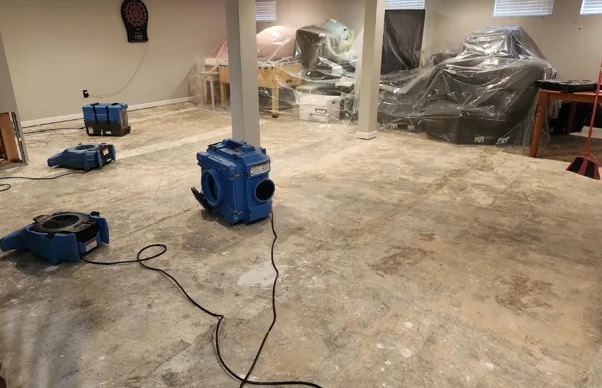
Structural moisture removal begins using industrial dehumidifiers and air movers to dry joists, beams, and wall framing from the inside out.
Step 3: Floor Joist and Beam Repair
Damaged floor joist repair and beam sistering or replacement are executed to restore the strength and level of the floor system.
Step 4: Reconstruction and Sealing
The final step involves reconstructing any opened walls or floors and applying sealants to protect the restored structural wood from future moisture.
Sources of Damage Requiring Full Structural Restoration in Bloomington
Major Plumbing System Failures
Burst supply lines or drain pipe failures can flood a structure, saturating load-bearing walls and floor systems.
Poor Drainage and Grading Issues
Improper yard grading directs water toward the foundation, a common cause of structural moisture removal projects.
Roof Leaks Over Extended Periods
Chronic roof leaks allow water to drip into attics and walls, slowly degrading structural framing integrity.
Natural Disaster Impact
Events causing significant water intrusion, such as pipe bursts or appliance failures, necessitate a thorough structural damage assessment for the safety of the building's framework.
Full Structural Restoration for Bloomington Residences and Stores
Residential Full Structural Restoration
For homes, foundation water restoration addresses cracks and seepage. The pros in Bloomington dry the area and add exterior or interior drainage to keep water out.
Commercial Full Structural Restoration
For commercial properties, wall framing drying services protect inventory and equipment. The professionals use targeted air movers and dehumidifiers to dry wall cavities in offices or labs without damaging sensitive contents.
Why Full Structural Restoration Requires Local Pros in Bloomington
Removing superficial water with a wet-dry vacuum from non-structural surfaces like floor coverings is acceptable if there is no collapse risk. Never pull down wet drywall or plaster from load-bearing walls, as this may destabilize them. Leave wall restoration after water damage to the pros.
What Affects Full Structural Restoration Cost in Bloomington, CA
Building structure repair expenses consider the accessibility of damaged areas, such as floor joists and wall framing, and the required drying time.
Scope of Deconstruction
The amount of drywall, flooring, or insulation that must be removed to access and dry structural elements influences the project's labor intensity.
Required Drying Time
Structural drying and dehumidification processes must run until materials reach a specific moisture content, affecting equipment rental duration and energy use.
Local structural restoration pros Labor Rates
The prevailing rates for the specialists in the California area are a component of the final service estimate.
Does Insurance Cover Full Structural Restoration?
The question of insurance coverage for structural damage assessment and repair is policy-specific. Homeowners should consult their insurer to verify what portions of the structural integrity restoration are covered.
Why Choose Local Pros for Full Structural Restoration in Bloomington
Foundation Restoration Focus
Attention to foundation water restoration helps prevent long-term settlement issues and preserves the stability of the entire structure above.
IICRC-Standard Structural Drying
Industry drying standards make sure no hidden moisture is left in framing and joists.
Comprehensive Damage Assessment
A structural assessment maps every affected area and sets the repair plan from the start.
24/7 Full Structural Restoration for Bloomington Emergencies
Hidden moisture can rot a home's structural bones, leading to costly repairs and safety hazards. For 24/7 emergency structural drying and repair, call the pros at (951) 584-3629.
Call Now (951) 584-3629Full Structural Restoration in Bloomington and Other Areas Served
Other places served are listed below, each with its own page.
- Full Structural Restoration in Sunnyslope
- Full Structural Restoration in Rubidoux
- Full Structural Restoration in San Bernardino
- Full Structural Restoration in Good Hope
- Full Structural Restoration in Highland
- Full Structural Restoration in Yucaipa
- Full Structural Restoration in Mentone
- Full Structural Restoration in Nuevo
Frequently Asked Questions About Full Structural Restoration
What happens during wall framing drying services?
Drywall and insulation are removed to expose the wood studs. High-velocity air movers and dehumidifiers then create airflow to evaporate moisture from the lumber until it is dry.
What equipment is used for structural drying methods?
Standard tools are industrial dehumidifiers, air movers, wall cavity drying systems and thermal cameras.
How long does structural drying and dehumidification take?
Drying dense structural wood like floor joists and wall framing typically takes several days, monitored with moisture meters until materials reach a dry standard to prevent future rot.
Why is foundation water restoration urgent?
Saturated foundation materials can erode, shift, or lose strength, leading to settlement cracks and instability in the entire structure above. Fast drying keeps repairs smaller.
Are special methods used for structural water damage repair?
Yes, methods include cutting access openings, building drying chambers and using industrial equipment for dense, waterlogged materials.